
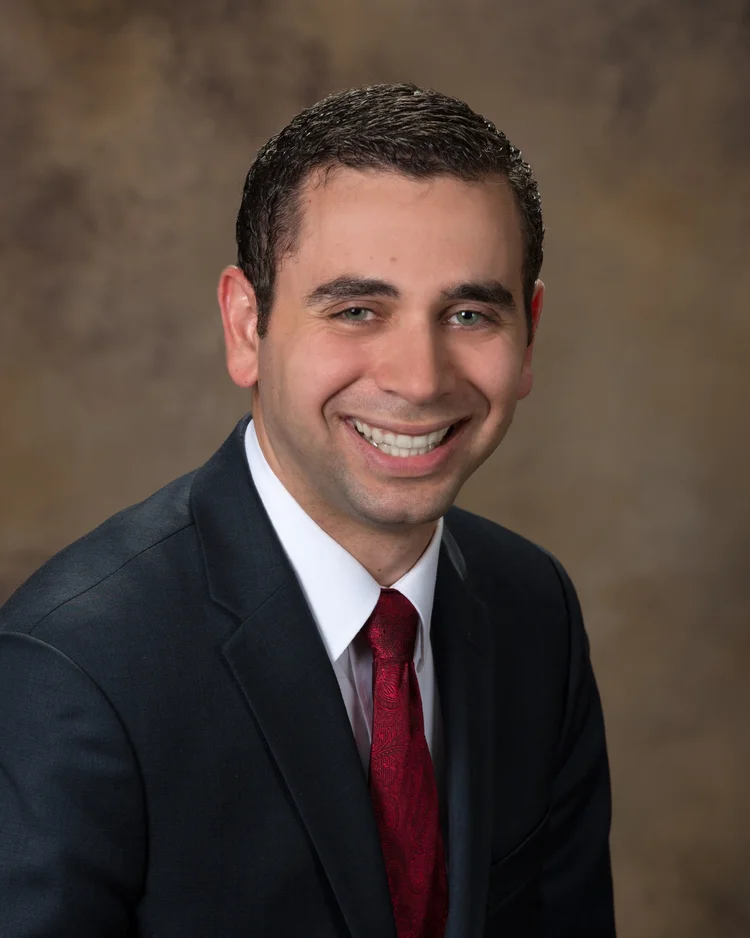
Remington Bronson, Esq.
Career public servant, researcher, writer, and longtime adviser to trial and appellate judges, with fifteen years of experience drafting and editing legal writing. Author of Florida Black Letter Citations: Appellate Review.
Experience
Second District Court of Appeal of Florida
Career Law Clerk
Clerk to the Honorable Suzanne Labrit (2024 – present) and previously to the Honorable Matthew C. Lucas (2015 – 2024).
- Resolved approximately 1,000 appellate cases to final disposition across criminal, civil, family, probate, guardianship, and administrative law.
- Draft recommended dispositions and present them orally to three-judge panels; draft opinions and prepare memoranda with preliminary recommendations for oral-argument cases.
- Helped draft, edited, or proofed several hundred opinions authored by the judges of the court.
- Drafted approximately 200 orders on jurisdiction, timeliness, mootness, record supplementation, and discipline.
- Directed the court's internship program for two years, rebuilding it from the ground up: hired and trained several dozen interns, taught seminars on jurisdiction, the Florida Rules of Appellate Procedure, and standards of review, and supervised their research and writing.
- Serve on volunteer court committees and advise on court procedure and operations.
Escobar & Associates, P.A.
Appellate and Postconviction Associate
- Ran the firm's federal and state appellate and postconviction practice: a dozen appeals and several dozen postconviction cases, from first-degree murder to sexual battery.
- Drafted most of the firm's motions across all practice areas and led its constitutional challenges to various statutes.
Thirteenth Judicial Circuit of Florida
Law Clerk
- Primary law clerk to circuit judges in the criminal, civil, and probate divisions; drafted most orders issued in those divisions.
- Sole law clerk advising the circuit's twenty-four county court judges for two years.
- Conducted live legal research during trial and resolved the circuit court's appellate cases.
Manhattan District Attorney's Office
Intern, Trial Division G and Sex Crimes Division
Second-chaired trials including sexual battery, copyright infringement, and aggravated assault. Prepared and argued responses to motions to suppress and motions for postconviction relief.
U.S. Attorney's Office for the District of Columbia
Intern, Sex Crimes Division
Legal research, memoranda, and responses to motions to suppress.
Writing samples
Retroactivity of an amended "Stand Your Ground" immunity statute
Whether an amendment enacted while the appeal was pending applies to the case.
Read the memorandum (PDF)Appellate jurisdiction and statutory construction
Determining the court's jurisdiction and applying canons of construction to a statute.
Read the memorandum (PDF)Affirmance of an order denying postconviction relief
A motion denied in part summarily and in part after an evidentiary hearing.
Read the memorandum (PDF)To preserve confidentiality, identifying details, case numbers, and party names in these samples have been altered.
Notable opinions
- Sawyers v. State 430 So. 3d 1007 (Fla. 2d DCA 2026) Omitting the "as the result of" causation phrase from a firearm-enhancement charge is a technical defect, not a substantive one, so it must be preserved by contemporaneous objection; no fundamental error where the defendant was repeatedly told of the 25-year mandatory minimum. Affirmed, conflict certified.
- State v. Young 408 So. 3d 140 (Fla. 2d DCA 2025) Affirmed per curiam. Judge Labrit's separate concurrence lays out the four-step trustworthiness analysis section 92.565 requires before a confession is admitted without corpus delicti, and explains why State v. Tumlinson read requirements into the statute that its text does not contain.
- State v. Crose 378 So. 3d 1217 (Fla. 2d DCA 2024) (en banc) Subsequent legislative amendments are not a basis for construing a statute's earlier meaning; "the sanction imposed" means the penalty exacted by a criminal court; receding from Hull and Madison at Soho II.
- Tracey v. Wells Fargo Bank, N.A. 264 So. 3d 1152 (Fla. 2d DCA 2019) Prejudice from a mid-trial amendment to conform to the evidence; the appellate court's equitable discretion in shaping the scope of remand.
- Phan v. Deutsche Bank Nat'l Trust Co. 198 So. 3d 744 (Fla. 2d DCA 2016) As a matter of first impression, a principal whose agent holds the note has constructive possession and standing to foreclose as a holder.
Full opinions and summaries on the Notable Opinions page.
Appellate law clerk research and writing tools
Guides to appellate research and opinion drafting that I developed over the years in chambers. They are free for anyone to use, share, and adapt.
The Appellate Research Pyramid
A one-page, five-level framework for working an appellate issue from framing the task and confirming jurisdiction and preservation, through defining the precise questions and testing the authority, to a conclusion that has confronted the strongest adverse argument.
Download the guide (PDF)Opinion Readiness Checklist
A practical final review for a draft opinion: resolve the case on the narrowest sufficient ground, let the standard of review guide the analysis, fairly address the parties' material arguments, and make sure the record supports every statement that matters.
Download the checklist (PDF)Publications
Florida Black Letter Citations: Appellate Review
Black letter laws are rules so established in our jurisprudence that they are no longer subject to reasonable dispute. This book collects succinct propositions of appellate review, organized by topic, each followed by citations from the Florida Supreme Court and all five district courts of appeal, with supporting excerpts. The goal is to let practitioners quickly craft precise sentences about standards of review using the courts' own language.
Expanded coverage, in-depth discussion of each standard of review and its correct (and incorrect) application, and corrections of common misunderstandings about how the standards should be argued.
Read an excerpt- Moralution: The Case for Homo Moralis. How and why the capacity for moral judgment emerged. On file at the Davis Library, UNC Chapel Hill.
- Bad Policies or Bad Measurements? A statistical analysis of whether SAT scores indicate the success of education policy. On file at the Davis Library, UNC Chapel Hill.
University of Tampa, Adjunct Professor of Criminology
2021 – 2023
Taught Introduction to the Criminal Justice System and Criminal Law and Procedure. Lectures covered search and seizure, elements of criminal offenses, theories of criminality, sentencing, appeals, and collateral and postconviction relief.
University of Maryland School of Law
J.D., cum laude
University of North Carolina at Chapel Hill
B.A. Political Science and B.A. Philosophy, with honors, with distinction
- Volunteer Teen Court Judge, Thirteenth Judicial Circuit. Presided over peer-conducted trials for teens charged with misdemeanors.
- Moot Court Coach, University of Tampa. Coached the undergraduate team on appellate argument, standards of review, constitutional law, statutory interpretation, and courtroom decorum.
- Hillsborough Lodge No. 25, F&AM. Community service throughout the year.
Ballroom dancing, SCUBA diving, violin, programming, building computers, and writing children's books.